



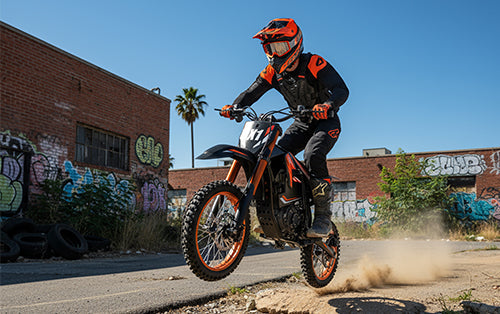
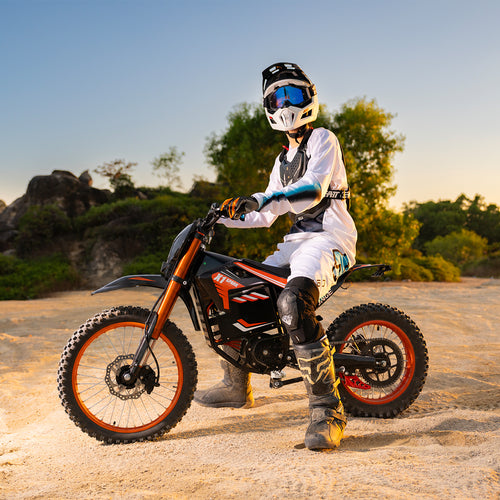

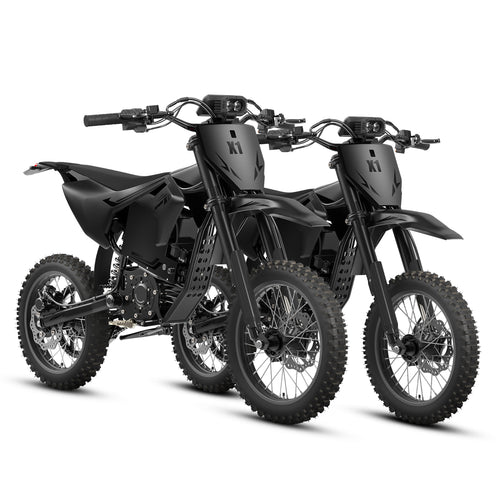
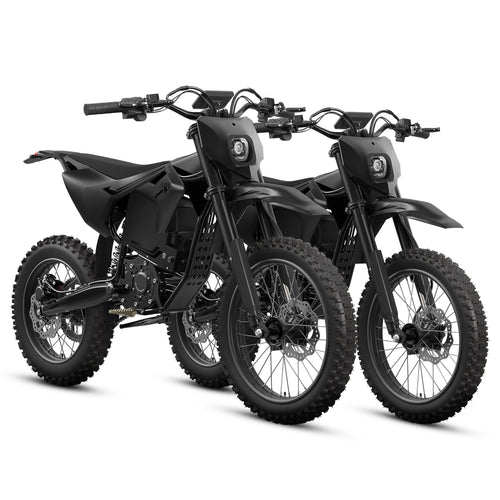
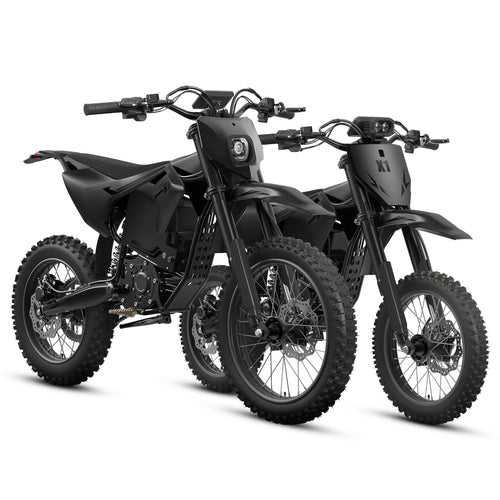


If you’ve ever taken your child to a permitted off-road riding area or an outdoor riding park, you may have noticed that more and more kids are starting to ride small electric dirt bikes. Some young riders are practising turns on grass or dirt trails, while others can already accelerate and ride over uneven terrain. For many families, these lightweight two-wheelers are not only a form of entertainment, but also an opportunity for kids to gradually develop balance, control, and confidence in outdoor riding.
However, when parents begin exploring children’s off-road motorcycles, they often discover that the differences between products are greater than expected. Some are designed mainly for basic riding practice, while others are much closer to youth-oriented off-road motorcycles. The differences can be seen in control features, bike size, battery range, chassis setup, and overall riding capability.
In the children’s electric dirt bike market, different brands typically design their products based on specific riding stages. For example, some OSET models are better suited for younger children just starting; STACYC bikes are often aimed at early-stage riding training; Razor’s Dirt Rocket series is commonly considered an entry-level option for kids; and brands like Qronge offer electric dirt bikes that deliver an experience closer to what teenagers would expect from an off-road motorcycle.
So, before comparing individual specifications, the more important question is: what type of electric dirt bike is appropriate for each stage of a child’s riding development? Understanding the differences in control, sizing, battery life, and overall riding setup is more useful than focusing on one specification alone.
Common Kids' Electric Dirt Bike Brands on the Market
|
Brand |
Product Positioning |
|
Razor |
Entry-level electric dirt bikes for kids |
|
STACYC |
Early riding introduction for young kids |
|
OSET |
Off-road training for children |
|
Qronge |
Electric dirt bikes for teenagers |
These brands cover different riding stages, which also leads to clear differences in size, power delivery, battery setup, and overall off-road capability. For many parents, simply understanding brand positioning is not enough. When comparing electric dirt bikes for kids, it also helps to look at ride time or range, rider fit, and the control features available on each model.
|
Brand |
Model |
Range / Ride Time |
|
Razor |
MX125 |
Up to 40 minutes of continuous use |
|
STACYC |
16eDRIVE |
30–60 minutes |
|
OSET |
12.5 Racing |
Specific ride time is not currently stated on the official product page |
|
Qronge |
X1 Spark M |
Up to approximately 97 km |
Manufacturers do not always report battery endurance in the same way. Razor and STACYC use ride time, while Qronge publishes a distance-based range, so these figures are better used to understand the intended riding pattern of each bike rather than as a direct like-for-like comparison.
So, when choosing an electric dirt bike for kids, a more important question is: what type of bike is suitable for each stage of a child’s riding development? Understanding the differences in safety, sizing, battery range, and power control is often more valuable than simply comparing headline specifications.
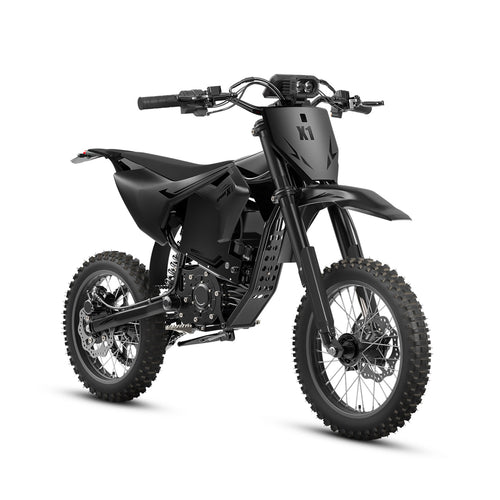
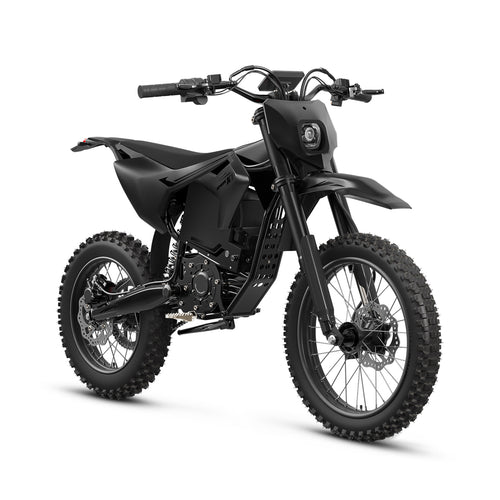
X1 Spark M
Safety: The First Factor to Consider for Kids’ Dirt Bikes
For most parents, safety is always the top priority when choosing a dirt bike for their child. Electric models can offer features such as adjustable power delivery, parental controls, or different riding modes, depending on the bike. However, the rider’s size, experience, supervision, and riding environment are still important parts of choosing an appropriate model.
For example, the Razor MX125 includes a parent-controlled high/low setting for novice riders. STACYC models offer multiple power modes for progressive learning. OSET allows parents to adjust power and throttle response, while the Qronge X1 Spark M uses different riding modes to adjust how the bike responds.
|
Brand |
Common Control Features |
|
Razor |
Parent-controlled high/low setting |
|
STACYC |
Multiple power modes |
|
OSET |
Adjustable power and throttle response |
|
Qronge |
Multiple riding modes |
Size & Fit: Can Your Child Easily Control the Bike?
The size of kids’ dirt bikes is designed differently from adult motorcycles. Seat height, bike weight, and overall proportions all affect a child’s stability while riding. If the bike is too tall, it becomes difficult for the child to keep balance when stopping; if it’s too heavy, both handling and moving the bike can become challenging.
|
Model |
Recommended Age |
|
Razor MX125 |
7+ years |
|
STACYC 16eDRIVE |
5–7 years |
|
OSET 12.5 Racing |
3–5 years |
|
Qronge X1 Spark M |
Teens |
When choosing a bike, parents should check whether the rider can comfortably reach the ground, handlebars, brakes, and other controls without struggling with the bike’s overall size or weight. Proper fit is often more useful than choosing a bike based on performance specifications alone.
Battery Range: How Long Can One Ride Last?
Battery range directly affects how long a child can ride each time. For kids who mainly ride in permitted outdoor areas or small off-road spaces, many smaller electric dirt bikes report their endurance in riding time rather than distance.
For example, Razor’s MX125 provides up to 40 minutes of continuous use, while the STACYC 16eDRIVE offers approximately 30–60 minutes of ride time, depending on terrain, hills, and riding conditions.
OSET takes a more training-focused approach with the 12.5 Racing, using adjustable power and throttle response for young riders. Its current official product page does not publish a specific ride-time figure, so it is better not to assign a fixed riding duration to this model.
For teen-oriented models such as the Qronge X1 Spark M, the larger 60V 28.8Ah battery supports up to approximately 97 km of range. This makes it more suitable for riders who are moving beyond short practice sessions and want longer outdoor off-road rides.
Riding Progression: Different Stages Need Different Setups
For young riders who are just starting, controllable power delivery, manageable bike size, and predictable braking are more important than headline performance. Beginner-focused models are designed to help riders practise starting, stopping, turning, and balance before moving into more demanding terrain.
As experience develops, adjustable power settings, stronger suspension, and a more capable off-road chassis become more relevant. This allows riders to progress into uneven ground and more varied trails without treating one performance figure as the main measure of whether a bike is suitable.
|
Brand |
Riding Stage / Focus |
|
Razor |
Basic recreational riding and first off-road experience |
|
STACYC |
Progressive balance and riding skills |
|
OSET |
Adjustable off-road training for young riders |
|
Qronge |
Teen riders progressing into more varied off-road terrain |
For older or more experienced riders, the focus therefore shifts from simply learning the controls to managing different terrain, longer riding sessions, and a more complete off-road setup.
Durability: Bike Structure for Off-Road Conditions
Kids’ dirt bikes are typically ridden on grass, dirt, or light off-road trails, so the bike’s structural design directly affects its long-term stability and durability. Compared to regular kids’ electric vehicles, dirt bikes need to handle more impact from the ground, such as bumps or gravel surfaces. This is why many models place greater emphasis on frame construction and suspension systems.
Different brands also focus on different aspects of structural design. Some entry-level models prioritise lightweight builds and simple structures, while others designed for older riders use stronger frames and more complete suspension systems to handle more complex off-road environments.
|
Brand |
Structural Features |
|
Razor |
Lightweight recreational structure |
|
STACYC |
Lightweight frame |
|
OSET |
Off-road training structure |
|
Qronge |
Off-road frame design |
Which Type of Kids' Electric Dirt Bike Is the Right Choice for You?
If your child is just starting off-road riding, Razor is more closely positioned as an entry-level option, with a simple structure that makes it easier to get started. STACYC is better suited for the early learning stage, with a lightweight design and progressive power settings that support balance and basic riding skills.
OSET is aimed more towards young riders who are moving into structured off-road training, with adjustable power response and a chassis designed around skills development.
For riders who are older and already have some basic riding experience, Qronge moves closer to a teen-oriented electric dirt bike in terms of battery capacity, chassis structure, riding modes, and overall off-road capability. The X1 Spark M is therefore better suited to riders who want to move beyond basic practice and gradually explore longer rides and more varied terrain.
The final choice should be based on the rider’s age, height, physical fit, riding experience, and the type of off-road environment where the bike will actually be used.


